Many Canadians are turning to gold as a way to preserve their wealth, protect against inflation, and diversify their portfolios. But before you purchase those shiny bars or coins, there’s one critical area you can’t afford to overlook: tax rules.
Gold might feel timeless, but its tax treatment is anything but simple. Whether you’re buying to invest, to hold as an heirloom, or to pass down to family, the tax implications in Canada can significantly affect your bottom line. In this article, we’ll break down everything you need to know about how gold purchases are taxed in Kelowna and across Canada.
Why It’s Crucial to Understand Gold Taxes
Gold is considered a “capital asset” under Canadian tax law, which means it’s treated differently from everyday consumer purchases. If you fail to plan for taxes when buying or selling Kelowna gold, you may be hit with surprise costs later on. And these tax rules apply whether you’re buying in Kelowna, Vancouver, or anywhere else in Canada.
Understanding the rules ahead of time helps you:
- Avoid unnecessary GST/HST charges
- Plan for capital gains taxes on future sales
- Make smarter choices about which type of gold to buy
Different Layers of Gold Taxation in Canada
Understanding how each type of gold purchase is taxed can save you hundreds or even thousands over time.
Are Gold Purchases Taxed When Buying Gold in Kelowna?
That depends on what type of gold you’re buying.
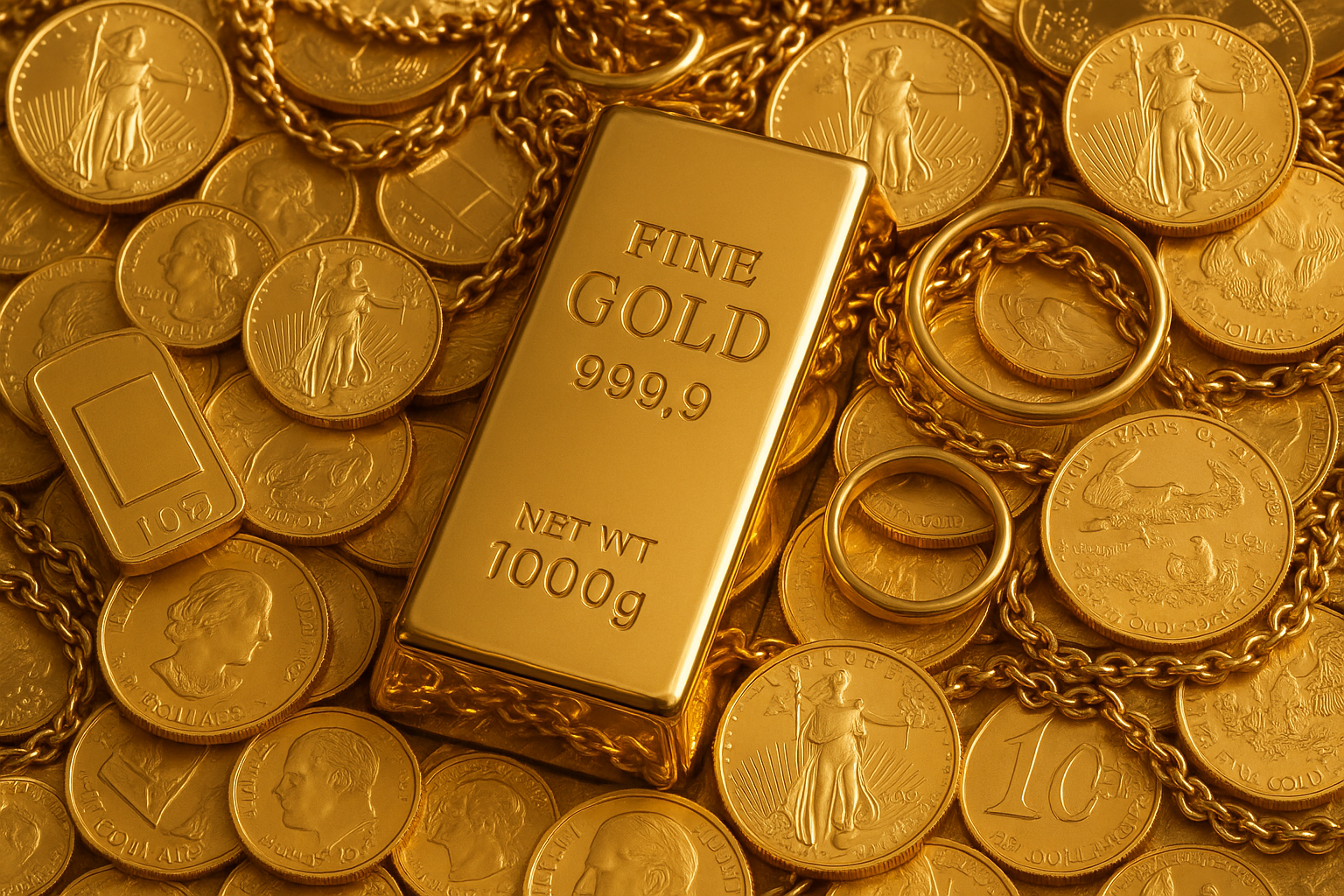
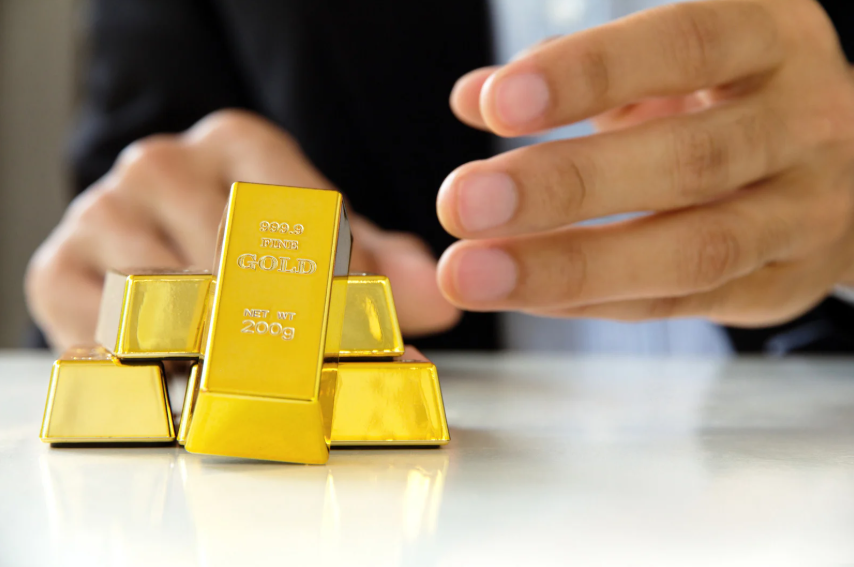
In Canada, certain forms of gold are exempt from GST/HST, but only if they meet specific purity standards. According to the Canada Revenue Agency (CRA), to be considered a “precious metal” and therefore exempt from sales tax, gold must meet all the following:
- Be in the form of a bar, coin, ingot, or wafer
- Have a purity level of at least 99.5% for gold and platinum, or 99.9% for silver
- Be issued by a recognized financial institution or refinery and clearly marked with purity levels
So if you buy a gold bar that meets those standards, you won’t pay any GST or HST. But if you buy jewelry, lower-purity coins, or novelty gold items? You’ll pay the same sales tax as you would on any retail purchase.
Gold Items That DO Get Taxed
Here’s a quick list of common gold products that are subject to GST or HST:
- Gold jewelry of any kind
- Collector’s coins under 99.5% purity, such as American Gold Eagles (91.67% or 22K)
- Gold Sovereigns, Krugerrands, and other coins not meeting the threshold
- Gold sold in granular or powder form
- Any gold item that is not minted or refined as investment-grade bullion.
GST/HST Rates Based on Province
Kelowna is in British Columbia, where the Harmonized Sales Tax (HST) does not apply. Instead, BC uses a separate 5% federal GST.
Here’s how that compares with other provinces:
- Alberta: No provincial tax, 5% GST only
- Ontario: 13% HST
- Quebec: 5% GST + 9.975% QST
- Nova Scotia, PEI, Newfoundland & Labrador: 15% HST
Always check with your gold dealer if the item you’re buying qualifies for tax exemption.
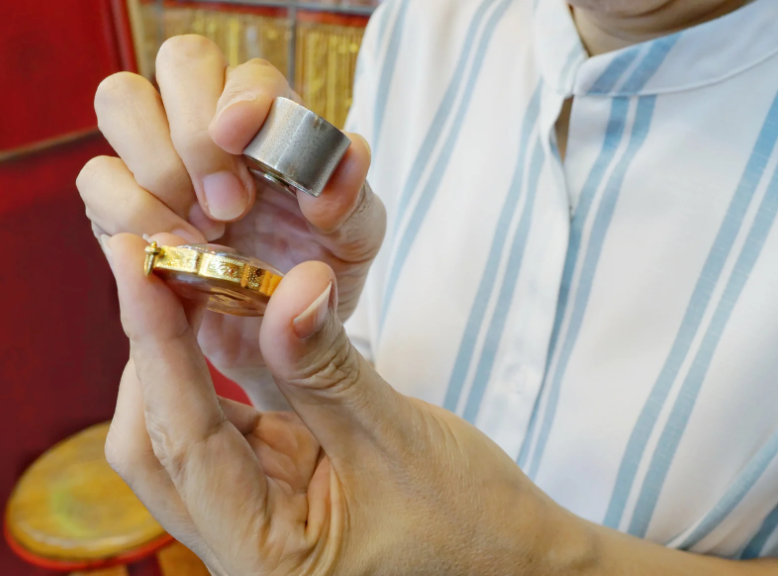
Capital Gains Tax on Selling Gold in Canada
Now let’s talk about the tax you might owe later, the capital gains tax.
If you sell your gold for more than you paid, you’ve made a capital gain. In Canada, 50% of that gain is taxable. That amount gets added to your regular income for the year and is taxed at your marginal tax rate.
Let’s say you bought $10,000 worth of gold back in 2021. Four years later, in 2025, you sell it for $14,000. That gives you a capital gain of $4,000. Under Canadian tax rules, only half of that gain, $2,000, is taxable. If your marginal tax rate is 30%, you would owe $600 in capital gains tax. Even if the sale involves just a few gold coins, the CRA still requires you to report it, because gold is treated like any other capital asset.
What About Capital Losses?
Not all gold sales are profitable. If you sell your gold for less than what you paid, that’s a capital loss.
Capital losses can be used to offset other capital gains you’ve made, reducing your tax bill. If you don’t have any gains this year, you can carry the loss forward to future years or back for up to three years.
It’s one more reason why keeping records of your gold purchases and sales is critical.
What Happens to Gold When Inheritance and Gifting
If you inherit gold or receive it as a gift, there’s no inheritance tax in Canada. However, the estate of the deceased may still owe capital gains tax if the value of the gold has increased. When gold is transferred through a gift or inheritance, the CRA often considers the transaction to have occurred at fair market value.
For example, if your parents originally purchased gold for $5,000 and it’s now worth $10,000, the estate may be taxed on the $5,000 gain, even if the gold isn’t sold. If you’re planning to pass gold down to your children or loved ones, it’s wise to consult a tax advisor to ensure everything is handled properly and no unexpected tax issues arise.
How the CRA Defines Precious Metals
According to the CRA, precious metals include gold, silver, and platinum, but only if they meet specific conditions.
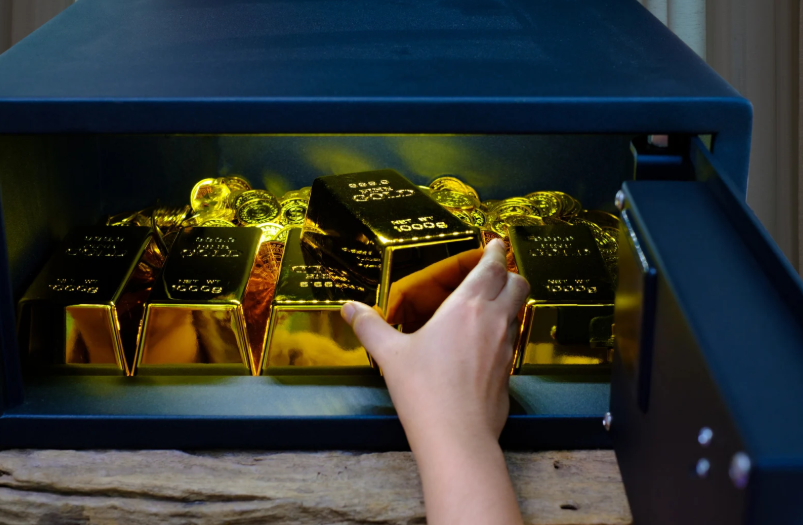
What is CRA Exactly?
A precious metal is a bar, ingot, coin, or wafer of gold, platinum, or silver that meets these criteria:
- Gold & Platinum: Minimum purity of 99.5%
- Silver: Minimum purity of 99.9%
- Marked with purity and issued by a government mint or approved refinery
These definitions are outlined in the CRA’s Financial Instruments Policy and Policy Statement P-192. Any gold that doesn’t meet these standards is considered property, not a financial instrument, so it’s taxable.
How to Avoid Tax Surprises When Buying Gold Kelowna
Tax rules aren’t just complex, they can also change from year to year. What applies today might not apply tomorrow, especially if the CRA updates its policies or if your income bracket shifts. That’s why it’s important to take a proactive approach.
Always work with a CRA-registered gold dealer and be sure to get documentation that confirms the purity and origin of your gold. Keep thorough records of every purchase and sale, no matter how small.
And before making any large transactions or selling gold kelowna, speak with a tax professional. A qualified accountant can help you plan your strategy in a way that minimizes tax and ensures compliance.
If you’re in Kelowna and want expert guidance with a trustworthy local touch, consider working with us at 5 Star Gold, Silver & Diamond. We specialize in buying and selling gold, silver, and other precious assets, offering transparent appraisals and fair market pricing.
Final Thoughts
Buying gold in Kelowna can be a smart move for long-term security. But it’s not just about choosing the right coin or bar, it’s also about understanding how taxes could affect your investment now and in the future.
By knowing what qualifies for tax exemption, how capital gains work, and what the CRA expects when you sell or pass down your gold, you’ll be in a far better position to make confident, well-informed decisions.
Always do your due diligence, and when in doubt, bring in an expert.