
If you have gold to sell in Kelowna, you have two obvious options: walk into a pawn shop, or go to a dedicated gold buyer. Most people assume the difference is just a matter of a few percent. It is not. The two businesses make their money in fundamentally different ways, and that difference is what determines the number you are offered.
This is a plain explanation of how each side works, what a fair scrap gold payout actually looks like, and, honestly, when a pawn loan is genuinely the better choice.
The Core Difference: A Loan Business vs a Metals Business
A pawn shop’s primary product is a short-term collateral loan. You hand over an item, receive cash, and the shop holds the item as security. The business earns its money on the interest when the loan is repaid, or by reselling the item at retail if the loan is forfeited. Every offer a pawnbroker makes has to survive that second scenario, because if you never come back, the shop must be able to sell your ring to a walk-in customer at a profit.
A dedicated gold buyer works differently. The business buys precious metal and stones and moves them into the refining and wholesale market in volume, earning a relatively thin margin over spot on a large number of transactions. There is no need to display your item, wait for the right buyer, or price in the risk of an unrepaid loan.
That is the whole reason the numbers differ. It is not that one business is dishonest and the other is generous. They are pricing two different sets of risks.
What a Fair Scrap Gold Payout Actually Looks Like
Scrap gold pricing is not mysterious. It is arithmetic, and any buyer worth dealing with will walk you through it.
Step 1: The spot price
Gold trades on a global market with a published spot price, usually quoted per troy ounce and easily converted to a price per gram. This is the baseline everything else is calculated from, and it moves throughout the day.
Step 2: Karat purity
Your jewellery is almost never pure gold. The karat stamp tells you what proportion of it is:
- 10k is 41.7 percent gold
- 14k is 58.5 percent gold
- 18k is 75.0 percent gold
- 22k is 91.7 percent gold
- 24k is 99.9 percent gold
Gold filled means a layer of gold mechanically bonded to a base metal core. Gold plated means a microscopically thin coating. Both contain far less gold than solid pieces, and thin plated items often are not worth processing at all. A good buyer will tell you this rather than quietly weighing it in with everything else.
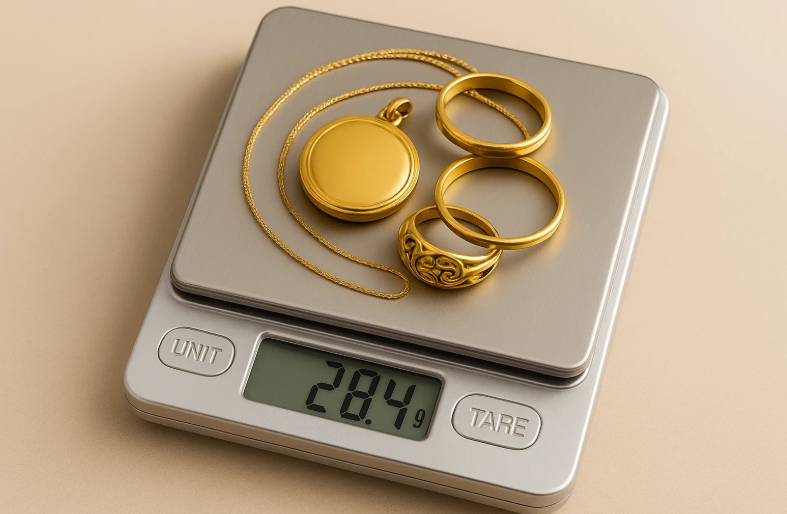
Step 3: The weight
Your gold is weighed in grams or pennyweight. One pennyweight is about 1.555 grams, so make sure you know which unit is being used before comparing quotes from two places.
Step 4: The buyer’s margin
Multiply the weight by the purity by the spot price per gram and you have the melt value. The offer will be a percentage of that figure, because refining, testing, transport and the business itself all cost money.
Here is the honest test: a buyer who tells you what percentage of spot they are paying is being transparent. A buyer who will not show you the scale, will not tell you what karat they tested at, and will not explain the math is not. That is true whether the sign outside says pawn shop or gold buyer.
Why the Pawn Shop Offer on Gold Is Usually Lower
Three things drive it, and none of them are about honesty:
- Loan risk is priced in. The offer has to work even if the shop ends up owning the item and reselling it at retail, which takes time and shelf space.
- No refining volume. Pawn shops are not set up to move metal into the refining stream at scale, so they cannot operate on the thin per-transaction margins a specialist can.
- Generalist staff. A pawnbroker’s team values guitars, power tools, game consoles and gold in the same afternoon. A metals specialist tests and weighs precious metal all day, every day, and can price it with more confidence, which usually means a stronger number rather than a cautious one.
This is exactly the gap our pawn shop alternative Kelowna page was written to explain, and it is why so many people searching for somewhere to pawn gold Kelowna end up selling outright instead once they understand the difference.
The Questions to Ask Before You Hand Anything Over
Take this list with you, wherever you go. Any legitimate buyer will answer all of it without hesitation.
- Will you weigh my items in front of me?
- What karat did you test this at, and how did you test it: acid, electronic tester, or XRF?
- What percentage of the current spot price is this offer?
- Is the offer itemised, or is it one lump sum for everything?
- How long is this quote good for?
- Do you value the stones separately from the metal, or not at all?
- Are you buying this to refine, or to resell as jewellery?
That last question matters more than people realise. If a piece is worth more intact than melted, a buyer who resells jewellery may actually pay you more for it than a refiner would. Knowing which one you are talking to tells you a lot.
When a Pawn Loan Genuinely Is the Right Choice
It would be easy to end this article by saying selling always wins. That would not be true, and you should be suspicious of anyone who tells you it is.
A collateral loan is the better choice whenever you want the item back. If the piece is a family heirloom, a wedding ring you are not emotionally ready to part with, or something with meaning you would regret losing, an outright sale is permanent and a loan is not. Likewise, if you only need to bridge a short gap and you are confident you can repay, a loan lets you access cash without giving up ownership.
The trade-off is straightforward: a loan costs you interest, but you keep the item. A sale nets you more cash, but the item is gone.
Worth knowing: you do not have to choose between two different businesses to get both options. We offer loans against gold or silver as well as outright purchases, so you can get both numbers in the same appointment and decide with the full picture in front of you.
Pawn Loan vs Gold Loan vs Selling Outright
There are really three options on the table, not two. Here is how they compare side by side.
| Pawn loan | Gold or silver loan | Outright sale | |
|---|---|---|---|
| What you hand over | Almost any item of value, held as security | Gold or silver, held as security | The item, permanently |
| Do you keep ownership? | Yes, if you repay on the agreed terms | Yes, if you repay on the agreed terms | No |
| What it costs you | Interest and any fees in the loan agreement | Interest and any fees in the loan agreement | Nothing to repay; the buyer’s margin is built into the offer |
| How the amount is set | Usually what the shop could resell the item for | Usually the metal’s weight, purity and market price | Weight, purity and market price, plus any stone or design value |
| If you cannot repay | The item can be forfeited under the loan terms | The item can be forfeited under the loan terms | Not applicable |
| Suits you when | You want the item back and it is not precious metal | You want the item back and it is gold or silver | You are ready to part with it and want its full value now |
If you are weighing these options, our Kelowna gold, silver and diamond buyer homepage outlines everything we buy, and the pawn shop alternative page explains how our approach differs from a pawnbroker’s.
What to Watch Out For
A few things should make you pause, regardless of who you are dealing with:
- Big percentage claims with no scale in sight. “We pay 90 percent of spot” means nothing if you never see the weight or the karat it was tested at.
- Mail-in gold envelopes. Once your jewellery is in the post, you have lost your leverage entirely, and disputing a lowball offer from another province is close to impossible.
- A quote given before anything is weighed. A number produced by glancing at a pile is a negotiating position, not a valuation.
- Pressure to decide immediately. A fair offer is still fair tomorrow. Anyone insisting the price vanishes if you walk out is managing you, not pricing your gold.
- Lump sums for mixed karats. A 10k chain and an 18k ring are not worth the same per gram. They should be sorted and weighed separately, not valued together at the lowest purity in the pile.
What to Do This Week
If you are ready to move on this, here is the practical version:
- Gather everything at once. Broken chains, single earrings, dental gold, old class rings, sterling flatware. One trip, one weigh-in.
- Look up the current gold spot price per gram before you leave the house, so you have a reference point.
- Check karat stamps where you can, but do not worry about unmarked pieces. They get tested.
- Bring government-issued photo ID. Businesses that buy precious metals can have federal identity-verification and record-keeping obligations for certain transactions, so expect to be asked.
- Get at least one offer with the math shown. Then decide.
For most people who have already decided to part with their gold, a specialist buyer usually makes more sense for selling gold in Kelowna, simply because of how the business model works. If you want to know the number before committing to anything, our gold appraisal Kelowna service is free and carries no obligation.
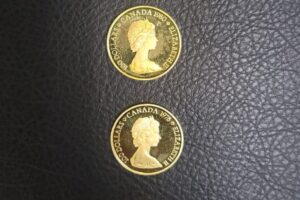
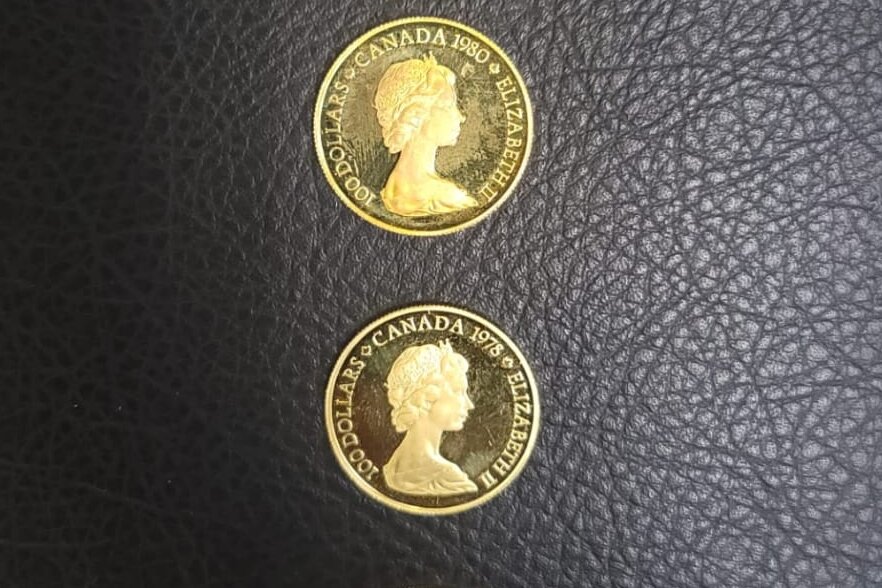
If what you are bringing is damaged or unwearable, that makes no difference to its value, and our page on how to sell broken jewellery in Kelowna explains why. For coins and bars, which are priced differently from scrap, see our sell gold coins Kelowna page.
Frequently Asked Questions
Is a gold buyer the same as a pawn shop?
No. A pawn shop’s main business is short-term loans secured by items you leave with it. A gold buyer’s main business is buying precious metal outright and moving it into refining and wholesale markets, which is why the two price gold differently.
What is the difference between a pawn loan and a gold loan?
Both are loans secured by something you leave with the lender. A pawn loan can be secured by almost any item of value, while a gold or silver loan is secured specifically by precious metal, so the amount is usually based on its weight, purity and current market price.
When does a loan make more sense than selling?
When you want the item back. A loan costs interest but lets you keep ownership if you repay on the agreed terms. A sale gives you more cash, but the item is gone for good.
How is a scrap gold offer calculated?
Weight multiplied by purity multiplied by the spot price per gram gives the melt value. The offer is a percentage of that figure, because refining, testing, transport and running the business all cost money.
Questions before you visit? Contact us or call (250) 801-1129. Our office is at Unit #206, 307 Banks Road, Kelowna, with free parking on site.