If you are looking to sell silver in Kelowna, the first question is almost always the same one: is this sterling or is it plated? 5 Star Gold Silver & Diamond checks hallmarks and tests each piece at the counter, then prices the sterling content against the live silver spot price on the day. We buy sterling flatware and holloware, jewellery, bullion bars and rounds, and silver coins at our Banks Road office. Assessments are free and there is no obligation to sell.

Silver brings its own set of questions, starting with one we hear often: is this piece actually silver, or just silver-plated? Genuine sterling is stamped with a hallmark, usually .925, meaning 92.5% pure silver bonded with other metals for strength. Plated pieces carry only a thin silver coating over a base metal and, once tested, are worth a fraction of what sterling brings, so checking for that hallmark is always the starting point.
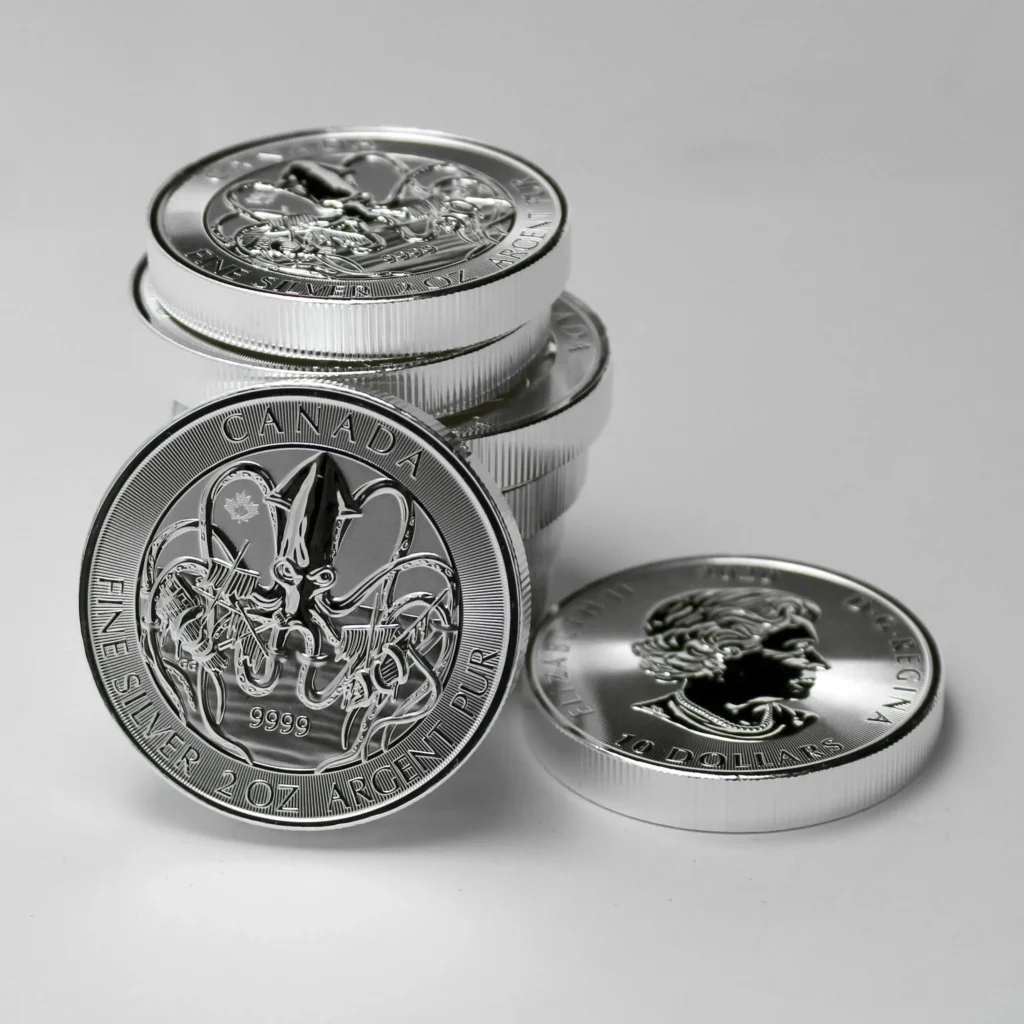
Flatware sets and tea services are some of the most common items we see, often inherited as part of a full set rather than sold piece by piece. These are weighed and tested the same way as jewellery, with the sterling content determining the payout regardless of age or pattern. Royal Canadian Mint coins and other recognized silver bullion are assessed against the current silver spot price rather than face value, since their worth comes from metal content. For coins that may carry collector value, see our guide to bullion vs collector coins.
Silver payouts differ from gold in one key respect: silver’s spot price is lower per ounce than gold’s, and silver items are typically a lower purity by weight than gold jewellery, so the per-gram numbers you see quoted will naturally look different between the two metals even when both are priced fairly.
Almost every silver question comes down to which of three categories a piece belongs to, and the difference between them is large.
Sterling (.925). 92.5% silver with copper for strength. Marked .925, 925, “STERLING” or “STER”. This is most silver jewellery, most quality flatware, and most holloware. Priced on silver content by weight.
Fine silver (.999). Bullion bars, rounds and modern mint coins. Higher purity than sterling and priced against spot on its fine-silver weight rather than face value.
Plate. A thin silver layer over a base metal. British and Canadian plate is often marked EPNS, EP, “A1” or “silver on copper”, and much of it carries no purity mark at all. Plate contains too little recoverable silver to be worth processing in most cases, and we will tell you at the counter rather than after you have made the trip.
Coin silver. Older Canadian and US circulating coins were struck in .800 or .500 silver depending on the year, so a jar of change is sorted by year and denomination rather than counted. See sell coins Kelowna.
Weighted or filled pieces are a common surprise. Candlesticks, some trophies and many knife handles have a sterling shell packed with cement, pitch or resin, so the object is far heavier than its silver content. Those are assessed on the silver only.
Hallmarks are checked, then confirmed by testing. The mark is the starting point, not the answer. Plate is separated out at this stage, before anything is weighed.
Sterling and fine silver are weighed separately. Silver is quoted in troy ounces, where one troy ounce is about 31.1 grams. A sterling piece is paid on 92.5% of its weight, not the whole weight.
Non-silver content is deducted. Filled knife handles, weighted bases, steel blades, glass liners and wooden fittings do not count toward the silver weight.
The live silver spot price is checked at that moment. Silver moves in larger percentage swings than gold, so timing shows up more visibly in silver offers than in gold ones.
You get a figure and decide. Sell all, part or none of it. Loans against gold or silver are an option if you would rather keep the items.
Because silver is worth far less per ounce than gold, quantity matters more here. A single sterling teaspoon is a small figure; a full canteen of flatware is not. If you are wondering whether a set is worth bringing in, it usually is.
The questions we are asked most about selling silver.
Look for .925, 925, STERLING or STER, usually on the back of a handle or the underside of a base. Marks like EPNS, EP, A1, or “silver on copper” indicate plate. If there is no mark at all, bring it in anyway, because plenty of genuine sterling is worn smooth or was never marked clearly.
No. Tarnish is surface oxidation and does not change purity or weight. Polishing before a visit is not necessary, and on antique pieces it can remove patina that contributes to value beyond the metal.
For most sets the payout is driven by sterling weight rather than pattern. Some sought-after patterns and makers carry resale value above metal, and those are looked at separately rather than being weighed straight into a scrap figure.
Silver’s spot price per ounce is a small fraction of gold’s, and most silver items are also lower purity by weight than karat gold jewellery. Both differences compound, so per-gram figures for the two metals look very different even when both are priced fairly against the market.
Yes. Mismatched spoons, a single serving piece or a set missing items are all bought on their sterling content. Completeness affects resale value, not metal value.
5 Star Gold Silver & Diamond
Welcome to Okanagan Gold, Silver & Diamond Dealers, your premier destination for buying and selling gold, silver, and diamonds in the Okanagan. We are dedicated to delivering exceptional value, transparency, and service to our customers.
5 Star Gold Silver & Diamond
Welcome to Okanagan Gold, Silver & Diamond Dealers, your premier destination for buying and selling gold, silver, and diamonds in the Okanagan. We are dedicated to delivering exceptional value, transparency, and service to our customers.
Copyright © 2026 – 5 Star Gold Silver & Diamond | Web Development Vancouver by BragDeal Inc.